The water is the problem
The Sea Blight is a green mist that mutates what it touches. Clear polyps, and do not linger far from a settlement after dark.
The thing that ends a bad trip in DREADMOOR is usually not a boss bar. It is distance, night, and whatever the Sea Blight has already done to the water and the air.
A breakthrough that got loose
Dev Diary 3, 28 April 2026, is Dream Dock's account of the blight. It was found on an expedition to the far north before the collapse, and it was treated as a breakthrough for medicine, science, and engineering. After the world flooded, it changed. It spreads, infects, and reshapes what it touches. The diary describes it clinging to surfaces and lingering in the air, often as a faint green mist.
It does not follow tidy disease rules. It moves through water, hangs as fog, and embeds in living things. Most mutations look chaotic. Some, especially in animals, have started to stabilize into traits that help survival, and those traits are passed on while new ones keep stacking. That is why the diary says no two creatures are truly the same. Some are grotesque, some oddly elegant, some unsettling because they feel almost intentional. Rare specimens are valuable as resources: they can be used, refined, and repurposed. Corruption, in this setting, is also a crafting input.
Humans are called the most vulnerable. Prolonged exposure is described as worse than a clean death: sanity fractures, and what remains is feral. Whole regions are avoided because of what the air carries, not only because of what lives there. High humidity and lingering contamination wear structures down. Solid ground becomes swamp. Ruins decay. Coastlines erode.
Nobody agrees why the land sank
Diary 4, 22 June 2026, refuses a single origin story, and that refusal is the lore you can actually use. Communication between settlements has been lost long enough that no explanation is universal. Depending on who you ask, the collapse is a technological disaster, a punishment, or something occult. Before it, humanity built climate-control technology, a global project meant to regulate seasons, rainfall, tides, and day-to-day weather. Some survivors claim that technology was turned into a weapon. The diary says there is no definitive proof.
What is treated as known is the shape of the aftermath. Land sank. Water rose. Melting permafrost and flooding cut the remaining landmass. It was sudden, and it kept going until the world looked like this. By the time you arrive, the diary says the world has stabilized. Stabilized is not safe. High water and broken ground are the map. Life remains, heavily mutated. Some people in that diary only care about surviving what comes next. That is a permitted stance, not a failure to finish the lore. You are meant to find fragments and decide what they mean. The game is not going to hand you one agreed history.
That uncertainty is why a ruined house in a dark swamp can be a threat with nobody in it. Diary 5 uses almost that picture: a falling-apart wooden house, alone, at night, is already unsafe. Calm water is the same trick. You do not know what is under it. Fog obscures. Silence makes ordinary sounds sharper. A light might be nothing.
Threats are shown once, then implied
Diary 5 is explicit about pacing. DREADMOOR is not built as constant combat or as a jump-scare game. Danger has to exist in the world, not only when something is on screen. Early on, during what the diary calls tutorial phases, some threats are encountered in a scripted way so you learn they are real. After that, tension is not supposed to depend on repeating the fight. It comes from travel, fishing, scavenging, and places that are rarely fully safe.
The day and night cycle is the switch. Fishing at night will not feel like fishing by day. The same logic, the diary says, applies to most of the game. One of the newer fish can glide through the water without announcing itself. That is the design reading of a "quiet" cast: the absence of a splash is not a clear line.
A demo review in the first days wanted special fish that attack whatever is on the hook, or attack you when you pick the fish up. That is a wish, not a listed system. Do not play as if the demo already does that. What the notes do list, for going deeper, is the grappling hook gun and the harpoon launcher, plus a primitive weapon teased in Diary 5 for breaking objects. Defence exists. It is supposed to land because the water already felt wrong.
What you do about it before you cast
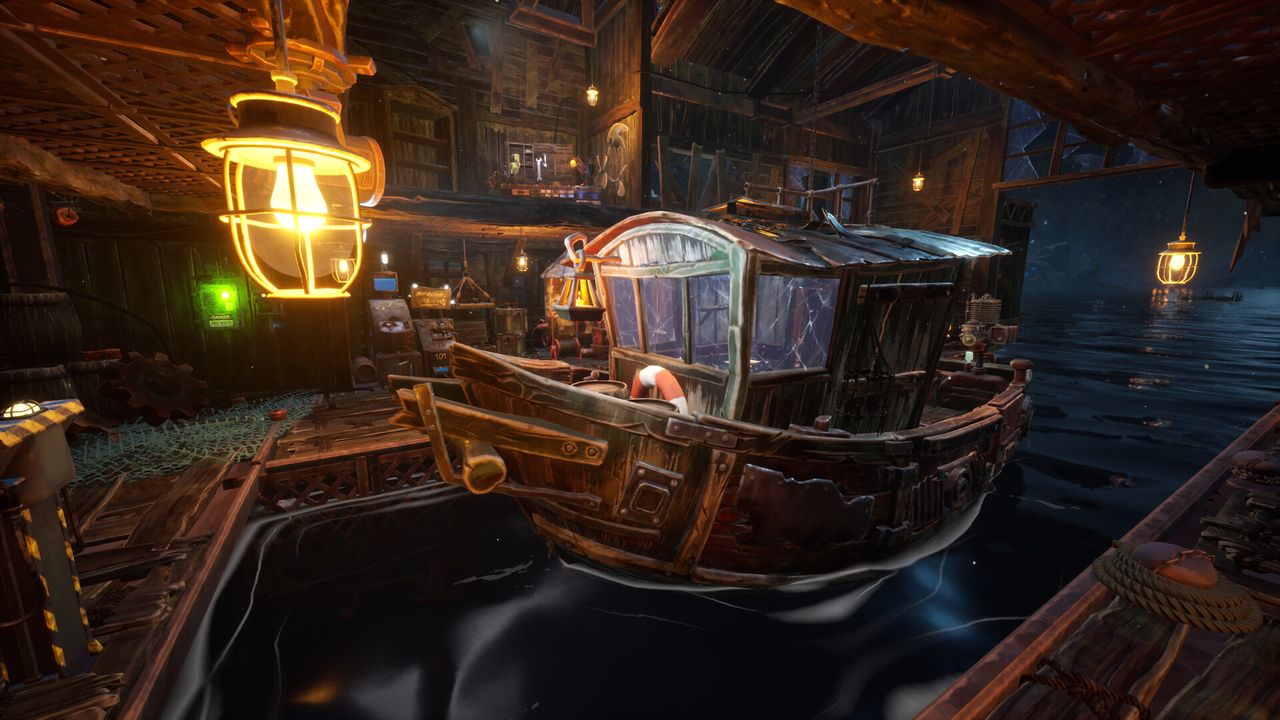
The July 16 announcement turns the blight into boat work: remove Sea-Blight polyps from the vessel, repair after dangerous encounters, refuel, and rest to pass time. Polyps on the hull are the practical sign that the mist is not only scenery. Clearing them is part of keeping the lifeline in Diary 6 able to bring you home.
Night and distance stack on top. The further you are from inhabited areas, the less predictable the world is, and being outdoors at night amplifies it. A long night run, polyps still on the hull, past the last settlement on the compass, is the trip these three diaries describe as one problem.
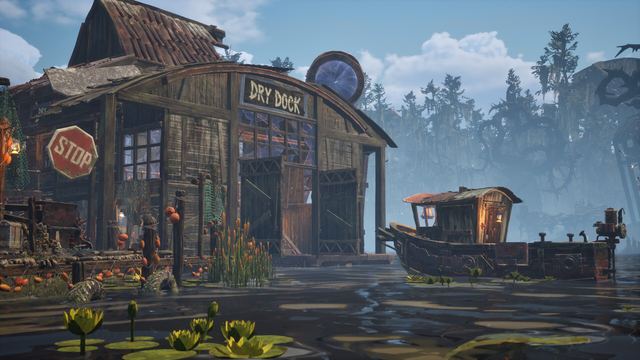
The settlement side of that problem, the harbour, the dry dock, and the helm labels, is the demo page. How the catch pays for the hull is the trawler page.
Sources: Dream Dock, Dev Diary 3 (28 Apr 2026); Dev Diary 4 (22 Jun 2026); Dev Diary 5 (19 Aug 2026); Dev Diary 6 (28 Aug 2026); July 16 demo announcement; early English Steam demo reviews.